







What's New
2025(January-June)
-
2026.1.1
-
2025.6.30
-
2025.6.13
-
2025.5.1
-
2025.4.10
-
2025.3.18
-
2025.3.15
-
2025.3.15
-
2025.3.14
-
2025.3.13
-
2025.2.1
-
2025.1.15
-
2025.1.14
-
2025.1.8
-
2026.1.1
明けましておめでとうございます。本年も大きな飛躍の年とすべく、中野研究室一同一丸となって教育・研究活動に邁進してまいります。引き続きご指導のほど、何卒よろしくお願い申し上げます。


-
2025.6.30
【学会】中野研究室のメンバーが THERMEC2025(@University of Tours, France, 6月30日~7月4日)に参加します。
2025/6/30
Invited Speaker
〇Design of high entropy alloy with suppressed elemental segregation for laser powder bed fusion process
Ozkan Gokcekaya, Yong Seong Kim, Takayoshi Nakano
Invited Speaker
〇Electron Microscopy Studies on Orientation-Controlled 316L Austenitic Stainless Steel
Produced by Laser Powder Bed Fusion
Kazuhisa Sato, Shunya Takagi, Satoshi Ichikawa, Takuya Ishimoto, Takayoshi Nakano
2025/7/1
Keynote Speaker
〇Innovative design of crystallographic textures and macroscopic shapes via metal additive manufacturing
Takayoshi Nakano
Poster presentation
〇Unique Hierarchical Structural Features Introduced by Laser Powder Bed Fusion and Their Contribution to Mechanical Function in IN718
Taichi Kikukawa, Takuya Ishimoto, Tsuyoshi Mayama, Ryosuke Ozasa, Takayoshi Nakano
Poster presentation
〇Microstructural Control of Unstable Beta-Type Titanium Alloy Through Powder Bed Fusion Using a Laser-Beam of Metals
Keitaro Miyasawa, Ryosuke Ozasa, Daisuke Egusa, Eiji Abe, Masakazu Tane, Takayoshi NakanoInvited Speaker
〇Elastic properties of laser powder bed fusion processed β-phase Ti alloys
Masakazu Tane, Shota Higashino, Eisuke Miyoshi, Takuya Ishimoto, Takayoshi Nakano
Invited Speaker
〇Microstructure control of TiAl alloys using peculiar thermal history of additive manufacturing
Ken Cho, Hiroyuki Y. Yasuda, Masao Takeyama, Takayoshi Nakano
〇Novel cellular structure with phase-separation induced dislocation-network in Ti-Zr-Nb-Ta-Zr high entropy alloy fabricated by laser powder bed fusion
Daisuke Egusa, Han Chen, Ryosuke Ozasa, Masayuki Okugawa, Taisuke Sasaki, Takuya Ishimoto, Koizumi Yuichiro, Takayashi Nakano, Eiji Abe
Poster presentation
〇Spinodal Decomposition and Magnetic Properties of Single-Crystal-Like Fe-Cr-Co Alloy Fabricated by Laser-Powder Bed Fusion Type Additive Manufacturing
Takato Saito, Yuheng Liu, Masayuki Okugawa, Kazuhisa Sato, Takayoshi Nakano, Yuichiro Koizumi
2025/7/2
Invited Speaker
〇A Novel Strategy for the Control of Crystallographic Texture of Metals with Non-Cubic Crystal System via Powder Bed Fusion using a Laser-Beam of Metals
Ryosuke Ozasa, Koji Hagihara, Takayoshi Nakano
〇Discovery of nano-scaled promising strengthening factor in 316L stainless steel fabricated by laser
powder bed fusion
Fei Sun, Yoshitaka Adachi, Kazuhisa Sato, Takuya Ishimoto, Takayoshi Nakano, Yuichiro Koizumi
〇Nano-scaled solidification microstructure characteristics in additively manufactured 316L stainless steel
Fei Sun, Yoshitaka Adachi, Kazuhisa Sato, Takuya Ishimoto, Takayoshi Nakano, Yuichiro Koizumi
〇Influence of hierarchical structure on mechanical properties of additive manufactured IN718 alloys
Kippei Yamashita, Ken Cho, Hiroyuki Y. Yasuda, Takuma Saito, Taisuke Sasaki, Sawaizumi Katsuhiko, Masayuki Okugawa, Koizumi Yuichiro, Takayoshi Nakano
Invited Speaker
〇Growth of Antiphase Domain in Laser-Irradiated Region and Superelasticity of Single-Crystal Like Fe3Al Fabricated by Laser Powder Bed Fusion Process
Yuheng Liu, Tsubasa Sato, Masayuki Okugawa, Kazuhisa Sato, Hiroyuki Y. Yasuda, Takayoshi Nakano, Yuichiro Koizumi
2025/7/3
Invited Speaker
〇Additive Manufacturing of Cell-Based 3D Bone-Mimetic Collagen/Apatite Structures
Aira Matsugaki, Takayoshi Nakano
Invited Speaker
〇Control of Bone Microstructure Formation: Role of Soluble Proteins Secreted by Osteocytes
Tadaaki Matsuzaka, Aira Matsugaki, Takayoshi Nakano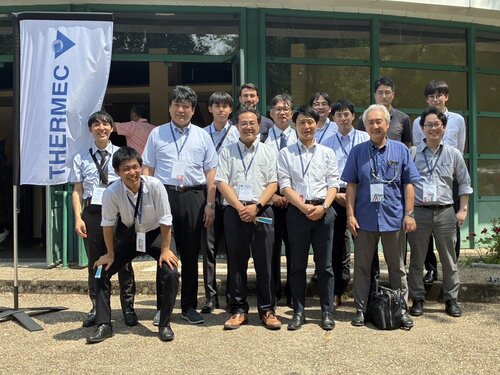
-
2025.6.13
An international collaborative research project with Postec on a high-strength, high-ductility medium-high entropy alloy utilizing the competition between precipitation and lattice strain has been published in "Materials Science and Engineering A".
Jae Heung Lee, Hyeonseok Kwon*, Gang Hee Gu, Ji Yeong Lee, Sang Guk Jeong, Emad Maawad, Changwan Ha, Jaemin Wang, Byeong-Joo Lee, Sangbong Yi*, Takayoshi Nakano, Hyoung Seop Kim*:
Harnessing competitive interplay between precipitation and lattice distortion for strong and ductile medium-entropy alloy,
Materials Science and Engineering A, 942, (2025) 148642: 1-11.
DOI: https://doi.org/10.1016/j.msea.2025.148642
Click here for this paper.
Abstract
In Co-Cr-Fe-Ni-Mo-C ferrous medium-entropy alloys (FeMEAs), precipitation-driven alteration of matrix composition affects both the kinetics of deformation-induced martensitic transformation (DIMT) and the degree of lattice distortion. While DIMT has been well studied, the role of lattice distortion remains explored. In this study, we simultaneously enhance the strength and ductility in Co18Cr13Fe57.5Ni7.5Mo3C1 (at%) FeMEA by harnessing the competitive interplay between precipitation and lattice distortion. Two annealed samples with similar grain sizes but different precipitate characteristics were prepared. The sample with suppressed precipitation exhibits improved ductility while maintaining comparable strength. The two specimens exhibited similar yield strengths due to a trade-off between precipitation strengthening and solid solution strengthening. However, the sample with higher lattice distortion and reduced precipitation demonstrates superior strain-hardening behavior owing to the lattice distortion-induced back stress, acting as an effective strain-hardening mechanism, and delayed DIMT, serving as a ductilizing mechanism. This work offers a strategy to modulate strengthening and deformation mechanisms in Co-Cr-Fe-Ni-Mo-C FeMEAs via precipitation control. -
2025.5.1
【受賞】中野貴由教授が、箕面商店(町田商店)の『完まくランキング』にて、他の追随を許さない"4倍超"の大差で第1位を獲得しました。
この快挙の裏側には、中野研究室のメンバーが自然と生み出した連帯感があります。
同じ目標に向かい、同じ空気を共有した瞬間、中野研の団結力がひとつの"圧倒的結果"となって表れました。 -
2025.4.10
Research on improving the creep properties of Ti alloys has been published in Journal of Metallurgical and Materials Transactions A.
Prince Valentine Cobbinah*, Sae Matsunaga, Yoshiaki Toda, Ryosuke Ozasa, Takuya Ishimoto, Takayoshi Nakano, Tsutomu Ito, Yoko Yamabe-Mitarai:*
On the enhanced creep performance in Ti6246 achieved through Laser Powder Bed Fusion (LPBF) processing,
Metallurgical and Materials Transactions A, (2025), in press.
DOI: https://doi.org/10.1007/s11661-025-07759-8
Click here for this paper.
Abstract
The high susceptibility of the Ti-6Al-2Sn-4Zr-6Mo wt pct (Ti6246) alloy to microstructural changes stands as a challenge when processed by the laser powder bed fusion (LPBF) technology. However, leveraging the capabilities of the LPBF process to successfully control the microstructure (and/or crystallographic texture) of the Ti6246 could improve mechanical properties, particularly at elevated temperatures. In this study, the creep performance (at 500 °C) of Ti6246 fabricated from three different LPBF processing conditions and heat-treated (HT) at 885 °C were investigated. In the as-built state, all the LPBFed-Ti6246 exhibited columnar microstructures with crystallographic lamellar-like microstructure (CLM), a near-single crystal-like microstructure (SCM), and polycrystalline microstructure (PCM) textures, respectively. At low applied stresses (100-300 MPa), diffusional creep was the dominant deformation mechanism and its resistance depended on grain size. The reference β-forged-HT Ti6246, characterized by large equiaxed grains, exhibited the lowest strain rate compared to the columnar microstructure of SX1 (CLM)-HT, SX2 (SCM)-HT, and SX3 (PCM)-HT. Conversely, dislocation slip governed deformation at high applied stresses (400-580 MPa) and its efficacy depended on the α/β interfaces in the microstructures. Disjointed columnar grains in SX1 (CLM)-HT and the deformation of the polycrystalline grains in SX3 (PCM)-HT indicated that the melt pool boundaries were unstable in the LPBFed-Ti6246. SX2 (SCM)-HT exhibited the longest creep life due to the relatively stable melt pool boundaries and the near < 001 > SCM crystallographic texture parallel to the applied stresses. Shallow ductile dimples and tears and the observation of laser scan tracks characterized the fracture surfaces of the LPBFed-Ti6246. These indicated that failure occurred by intergranular ductile fracture resulting from the formation of microvoids at the melt pool boundaries. -
2025.3.18
Research on computer simulation of AM has been published in Journal of the Japan Society of Powder and Powder Metallurgy.
Shuhei Mino, Masayuki Okugawa, Takayoshi Nakano, Yuichiro Koizumi:
Raking and Fusing Behaviors during Fabrication of Multiple-layers in Powder Bed Fusion: An integrated discrete Element and computational thermal fluid Dynamics Study
Journal of the Japan Society of Powder and Powder Metallurgy, 72, (2025), 16P-T6-11; S1465-S1469.
https://doi.org/10.2497/jjspm.16P-T6-11
Click here for this paper.
Abstract
In the powder bed fusion (PBF) type additive manufacturing (AM), understanding the relationship between the quality of the powder bed and the powder spreading process is crucial to avoiding defect formation. In this study, we investigated the powder-raking behavior during the multiple-layer fabrication process by discrete element method (DEM) and computational thermal-fluid dynamics (CtFD) simulations. The integrated PBF process simulation revealed that the gap height between the powder spreading blade and the build platform increases nonlinearly with the number of stacking layers, and accordingly, the powder-covered area ratio increases in the formed powder beds and affects the melt pool shapes. The powder raking behavior and melting and solidification behavior are related to each other, and both the powder raking and the irradiation conditions need to be optimized to obtain a high-quality part in the PBF process.Keywords
additive manufacturing; powder bed fusion; discrete element method; computational thermal-fluid dynamics -
2025.3.15
A paper on Young's modulus prediction for Ti alloys was published as an OA article in Additive Manufacturing (IF=10.3).
Shota Higashino, Daisuke Miyashita , Takuya Ishimoto, Eisuke Miyoshi, Takayoshi Nakano, Masakazu Tane*:
Low Young's modulus in laser powder bed fusion processed Ti-15Mo-5Zr-3Al alloys achieved by the control of crystallographic texture combined with the retention of low-stability bcc structure,
Additive Manufacturing, 102 (2025), 104720; 1-13.
https://doi.org/10.1016/j.addma.2025.104720
Click here for this paper.
Abstract
Metastable β (body-centered cubic)-phase Ti alloys, quenched from a high-temperature β-phase field, have attracted great interest as biomedical implants, owing to their low Young's modulus. Recently, the application of additive manufacturing (AM) to β-phase Ti alloys has gathered much attention, because the AM process can form anisotropic crystallographic texture in which an elastically soft direction is preferentially oriented, resulting in low Young's modulus in a specific direction. However, the effects of anisotropic texture and microstructure formed by the AM process on anisotropic elastic properties have not been clarified in detail. In the present study, we measured all the independent elastic stiffness components of β-phase Ti-15Mo-5Zr-3Al (mass%) alloys, prepared by bidirectional scanning with (XY-scan) and without (X-scan) an interlayer rotation of 90° in laser powder bed fusion (LPBF), one of the AM processes, using resonant ultrasound spectroscopy. The measurements revealed that the LPBF-processed Ti alloys exhibited strong elastic anisotropy and a low Young's modulus (below 60 GPa) in the <100>-oriented direction of the alloy prepared by the XY-scan. Furthermore, micromechanics calculations based on Eshelby's inclusion theory revealed that the single crystal constituting the alloys prepared by LPBF had almost the same elastic stiffness as that of a single crystal prepared by the floating zone melting, which indicated that the metastable β phase was retained by suppressing an easily occurring β- to ω-phase transformation during LPBF. These results indicate that texture control combined with retention of the metastable β phase by LPBF achieves biocompatible low Young's modulus.
Keywords
Laser powder bed fusion; Elastic properties; Titanium alloys; Crystallographic texture; ω phase transformation -
2025.3.15
The one-process realization of alloying, microstructure control, and shape control by metal 3D printers was published in Materials & Design.
Yong Seong Kim, Ozkan Gokcekaya*, Kazuhisa Sato, Ryosuke Ozasa, Aira Matsugaki, Takayoshi Nakano*:
In-situ alloying of nonequiatomic TiNbMoTaW refractory bio-high entropy alloy via laser powder bed fusion: Achieving suppressed microsegregation and texture formation,
Materials & Design, 252, (2025), 113824; 1-18.
https://doi.org/10.1016/j.matdes.2025.113824
Click here for this paper.
Abstract
High-entropy alloys (HEAs) have attracted considerable attention owing to their excellent properties. However, the severe segregation of the constituent elements remains a common challenge in refractory HEAs. Recently, an approach to suppress segregation was proposed using laser powder bed fusion (LPBF) owing to the ultra-high cooling rates during solidification. Despite the advantages of LPBF, the persistent microsegregation between the dendritic and interdendritic regions of refractory HEAs and costly gas atomization process hinder the further development. To address these challenges, a novel nonequiatomic TiNbMoTaW refractory HEA was designed to minimize the difference between the liquidus and solidus temperatures to prevent segregation and phase separation for a better biological performance. In-situ alloying was implemented instead of costly and time-consuming gas atomization process. The segregation of constituent elements was suppressed by remelting, resulted in epitaxial growth and development of crystallographic texture, consequently reducing residual stress. The mechanical properties were improved due to the increase of solid solution strengthening and densification. It showed superior mechanical strength and equivalent biocompatibility compared to conventional biomaterials, indicating its superiority as a biomaterial. This study represents the first successful control of crystallographic texture through in-situ alloying of BioHEAs for next-generation biomaterials.
Keywords
High entropy alloys; Additive manufacturing; In-situ alloying; Crystallographic texture; Segregation -
2025.3.14
The results of joint research on AM with Abe Lab. at the University of Tokyo were published in Additive Manufacturing (IF=10.3).
Han Chen, Daisuke Egusa*, Zehao Li, Taisuke Sasaki, Ryosuke Ozasa , Takuya Ishimoto, Masayuki Okugawa, Yuichiro Koizumi, Takayoshi Nakano, Eiji Abe*
Phase-separation induced dislocation-network cellular structures in Ti-Zr-Nb-Mo-Ta high-entropy alloy processed by laser powder bed fusion,
Additive manufacturing, 102, (2025), 104737; 1-14.
https://doi.org/10.1016/j.addma.2025.104737
Click here for this paper.
Abstract
Hierarchical structures, such as cellular structures, elemental segregations, and dislocation-network, are often proposed to enhance the mechanical properties of high-entropy alloys (HEAs) fabricated via additive manufacturing (AM). The formation of cellular structures is often attributed to elemental segregation during the solidification process or thermal strain resulting from the AM process. Here, we present a novel cellular structure where phase-separation and dislocation-network coupled in Ti-Zr-Nb-Mo-Ta HEA processed by laser powder bed fusion (L-PBF). Electron microscopy observations and X-ray diffraction (XRD) analyses show that this unique cellular structure consists of Zr-rich and Ta-rich body-center cubic (BCC) phases as the cell-wall and the cell-core, respectively, with their lattice constant difference of about 1 %. Moreover, a higher density of dislocations forming distinct networks is detected within this cellular structure, whose density reached 8 × 10 14 m 2 . Ma chine learning analysis reveals that the dislocations preferentially occur on the Zr-rich BCC side, thus accom modating the strains significant around the boundaries between the two BCC phases. With the aid of thermodynamic simulations, we propose a formation mechanism of the present cellular structure, which is governed by the elemental partitioning behavior of Zr and Ta during a solid-state phase separation under rapid cooling. Boundaries with this phase separation are introduced as semi-coherent interfaces with misfit disloca tions, introducing a high-density dislocation in the present material. This novel cellular structure can signifi cantly enhance the strength of AM HEAs, providing valuable insights for developing high-performance AM metals through the design of hierarchical microstructures.Keywords
High-entropy alloy; Laser powder bed fusion; Cellular structure; Phase separation; Dislocation-network; Electron microscopy; Machine learning -
2025.3.13
The Signature Pavilion "Future of Life" website has been renewed and reopened, and an article about Nakano Lab. has been posted on the "Future Technology" Seeds page.
An Innovative Bone Medical Device That Can Induce Strong Bones from the Early Stages of Regeneration
Click here to go to the top page→
https://expo2025future-of-life.com/
Click here to go to the Seeds of Future Technology top page→
https://expo2025future-of-life.com/about/future-technology-seeds/ -
2025.2.1
A paper on the microstructural effects of post-processing during laser and electron beam lithography has been published in the CIRP Journal of Manufacturing Science and Technology (IF=4.6).
Jibin Boban*, Afzaal Ahmed, Ozkan Gokcekaya , Takayoshi Nakano:
Ultra-precision surface treatment of beta-Titanium alloy printed using laser and electron beam melting sources, CIRP Journal of Manufacturing Science and Technology, 58, (2025), 01.006; 1-19.
https://doi.org/10.1016/j.cirpj.2025.01.006
Click here for this paper.
Abstract
Additive Manufacturing (AM) is a near net shape fabrication technology offering exceptional design freedom for complex part production. However, the inadequate surface quality and poorly generated micro-features adversely affect the functional performance of metal AM parts thereby restricting the direct adoption in biomedical implantation applications. Ultra-precision diamond turning (UPDT) can be regarded as a possible solution to overcome the aforementioned challenges in metal AM. However, the machinability of metal AM parts at ultra-precision level is highly sensitive to the material specific attributes and microstructure generated by the thermal characteristics of the process. In light of this, the present study follows a novel direction by investigating the dependence of distinct material characteristics imparted by two different AM powder melting sources on the ultra-precision post-treatment performance. Experiments were conducted on laser and electron beam printed beta-Ti alloy (Ti-15Mo-5Zr-3Al) which has potential importance in biomedical applications. The results demonstrate that the microstructural variations in respective samples affect the process performance and final surface integrity. The samples printed using laser powder bed fusion (LPBF) achieved a final surface finish (Sa) of ~66.3 nm after UPDT relative to the electron beam powder bed fusion (EPBF) samples (~104.3 nm). The cutting forces tends to exhibit sharp dip in forces in case of LPBF samples when micro-cutting was done perpendicular to the beam scanning direction. The chip morphology analysis corresponding to the LPBF and EPBF samples sub stantiates the generation of chips with segmentation/serrations on the free chip surface and parent material adhesion on the tool-chip contact surface. Further, precise microfeature generation was successfully accom plished on both the samples with minimal dimensional deviations on LPBF sample. Thus, the outcomes of the study establish the potential of UPDT in elevating the bioimplant surface standards of beta-Ti alloy with superior performance in LPBF samples.Keywords
Additive manufacturing; Powder bed fusion; Diamond turning; Titanium; Microstructure -
2025.1.15
A joint research with Yamaguchi University School of Medicine that elucidated that methylglyoxal inhibits fracture treatment through osteoblast differentiation was published in Biochemical and Biophysical Research Communications.
Tetsuya Seto, Kiminori Yukata, Shunya Tsuji*, Yusuke Takeshima, Takeshi Honda, Akihiko Sakamoto, Kenji Takemoto, Hiroki Sakai, Mayu Matsuo, Yurika Sasaki, Mizuki Kaneda, Mikako Yoshimura, Atsushi Mihara, Kazuya Uehara, Aira Matsugaki, Takayoshi Nakano, Koji Harada, Yoshiro Tahara, Keiko Iwaisako, Ryoji Yanai, Norihiko Takeda, Takashi Sakai, Masataka Asagiri*:
Methylglyoxal compromises callus mineralization and impairs fracture healing through suppression of osteoblast terminal differentiation,
Biochemical and Biophysical Research Communications, 747, (2025), 151312; 1-8.
https://doi.org/10.1016/j.bbrc.2025.151312
Click here for this paper.
Abstract
Impaired fracture healing in diabetic patients leads to prolonged morbidity and increased healthcare costs. Methylglyoxal (MG), a reactive metabolite elevated in diabetes, is implicated in various complications, but its direct impact on bone healing remains unclear. Here, using a non-diabetic murine tibial fracture model, we demonstrate that MG directly impairs fracture healing. Micro-computed tomography revealed decreased volumetric bone mineral density in the callus, while callus volume remained unchanged, resulting in a brittle bone structure. This was accompanied by reduced expression of osteocalcin and bone sialoprotein, both critical for mineralization. Biomechanical analysis indicated that MG reduced the mechanical resilience of the fracture site without altering its elastic strength, suggesting that the impairment was not primarily due to the accumulation of advanced glycation end-products in the bone extracellular matrix. In vitro studies confirmed that non-cytotoxic concentrations of MG inhibited osteoblast maturation and mineralization. Transcriptomic analysis identified downregulation of Osterix, a key transcription factor for osteoblast maturation, without altering Runx2 levels, leading to decreased expression of key mineralization-related factors like osteocalcin. These findings align with clinical observations of reduced circulating osteocalcin levels in diabetic patients, suggesting that the detrimental effects of MG on osteoblasts may extend beyond bone metabolism. Our study highlights MG and MG-sensitive pathways as potential therapeutic targets for improving bone repair in individuals with diabetes and other conditions characterized by elevated MG levels.Keywords
Fracture healing; Osteoblasts; Diabetes; Methylglyoxal -
2025.1.14
Acta Biomaterialia (IF=9.4) published an article on induction of bone orientation by zebra coating with MPC polymer.
Tadaaki Matsuzaka, Aira Matsugaki*, Kazuhiko Ishihara, Takayoshi Nakano*:
Osteogenic tailoring of oriented bone matrix organization using on/off micropatterning for osteoblast adhesion on titanium surfaces, Acta Biomaterialia, 192, (2025), 39644943; 487-500.
https://doi.org/10.1016/j.actbio.2024.12.017
Click here for this paper.Abstract
Titanium (Ti) implants are well known for their mechanical reliability and chemical stability, crucial for suc cessful bone regeneration. Various shape control and surface modification techniques to enhance biological activity have been developed. Despite the crucial importance of the collagen/apatite bone microstructure for mechanical function, antimicrobial properties, and biocompatibility, precise and versatile pattern control for regenerating the microstructure remains challenging. Here, we developed a novel osteogenic tailoring stripe- micropatterned MPC-Ti substrate that induces genetic-level control of oriented bone matrix organization. This biomaterial was created by micropatterning 2-methacryloyloxyethyl phosphorylcholine (MPC) polymer onto a titanium (Ti) surface through a selective photoreaction. The stripe-micropatterned MPC-Ti substrate establishes a distinct interface for cell adhesion, robustly inducing osteoblast cytoskeleton alignment through actin cyto skeletal alignment, and facilitating the formation of a bone-mimicking-oriented collagen/apatite tissue. More over, our study revealed that this bone alignment process is promoted through the activation of the Wnt/ β-catenin signaling pathway, which is triggered by nuclear deformation induced by strong cellular alignment guidance. This innovative material is essential for personalized next-generation medical devices, offering high customizability and active restoration of the bone microstructure.
Keywords
Photoreactive; MPC polymer; Stripe-micropatterned titanium substrate; Osteoblast orientation; Apatite/collagen orientation; Bone regeneration -
2025.1.8
The paper on "Superposition of 'material (crystal orientation)' and 'shape' by AM to express mechanical functions", a result of JST-Crest, has been accepted by Acta Materialia (Elsevier, IF=8.3). The paper was published as an OA paper.
Takuya Ishimoto, Naotaka Morita, Ryosuke Ozasa, Aira Matsugaki, Ozkan Gokcekaya, Shota Higashino, Masakazu Tane, Tsuyoshi Mayama, Ken Cho, Hiroyuki Y. Yasuda, Masayuki Okugawa, Yuichiro Koizumi, Masato Yoshiya, Daisuke Egusa, Taisuke Sasaki, Eiji Abe, Hajime Kimizuka, Naoko Ikeo, Takayoshi Nakano*:
Superimpositional design of crystallographic textures and macroscopic shapes via metal additive manufacturing--Game-change in component design, Acta Materialia, 286, (2025), 120709; 1-12.
DOI: https://doi.org/10.1016/j.actamat.2025.120709
Click here for this paper.
Abstract
This study demonstrates the control of the crystalline orientation through metal additive manufacturing, enabling the development of component design guidelines that incorporate the inherent anisotropy of the me chanical properties (e.g., Young's modulus) in crystalline materials. We, for the first time, successfully fabricated a <111>//build direction (BD)-oriented single-crystalline-like texture in an alloy with a cubic crystal structure via laser powder bed fusion (LPBF) and completed a series of three single-crystalline-like microstructures with <001>, <011>, and <111>//BD orientations in a single material. The <001>and <111>directions exhibited the lowest and highest Young's moduli, respectively, demonstrating a wide range of control over the anisotropy of the mechanical properties of the product. To achieve a <111>//BD-oriented single-crystalline-like texture, a novel three-layer cyclic strategy of "uni"directional laser scanning at 120◦ angular intervals was developed by considering the easy growth direction and crystal symmetry. To the best of our knowledge, no previous study has reported this unique strategy. By superimposing the realized <111>orientation and shape-based anisotropy, products exhibiting high Young's modulus anisotropy, which cannot be expressed by shape and texture alone, were obtained via the LPBF single process. This achievement holds promise for the realization of a new component design guideline that integrates texture (mechanical properties) design for each internal location--modifiable through scanning strategies--with traditional shape optimization techniques typically used in computer-aided design. This approach enables tailored mechanical performance through optimized design strategies.Keywords
Laser powder bed fusion; Shape anisotropy; Crystallographic orientation; Superimposition; 3D puzzle; Young's modulus